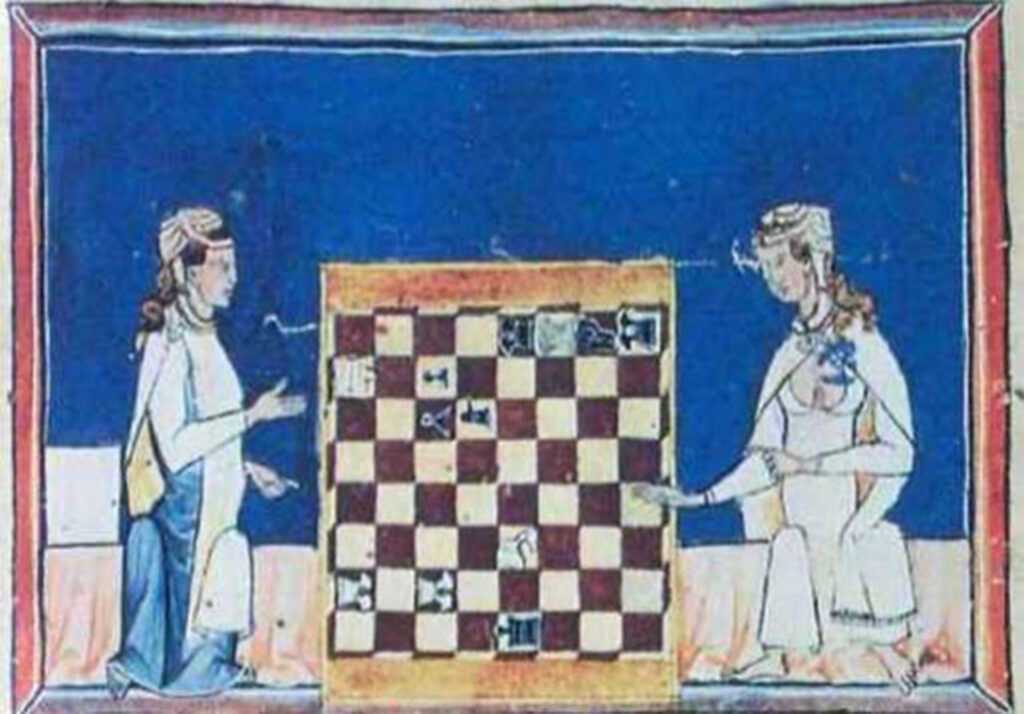
खेलों की पुस्तक (स्पेनिश: “खेलों की पुस्तक”), या शतरंज, पासा और टैबला की किताब (“शतरंज, पासा और तालिकाओं की पुस्तक”, पुरानी स्पेनिश में)
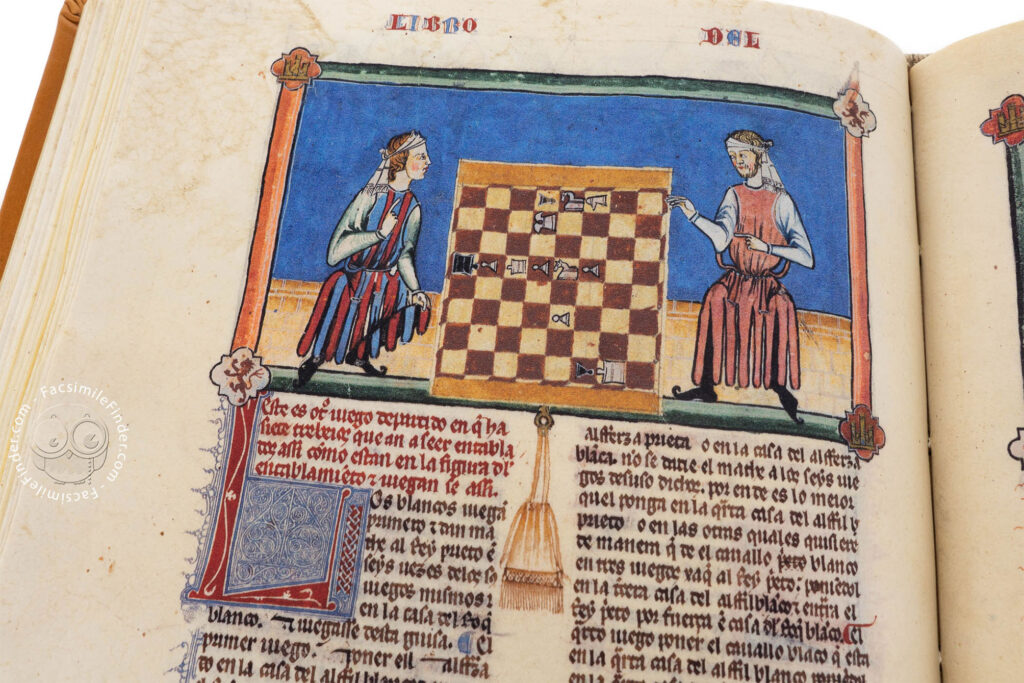
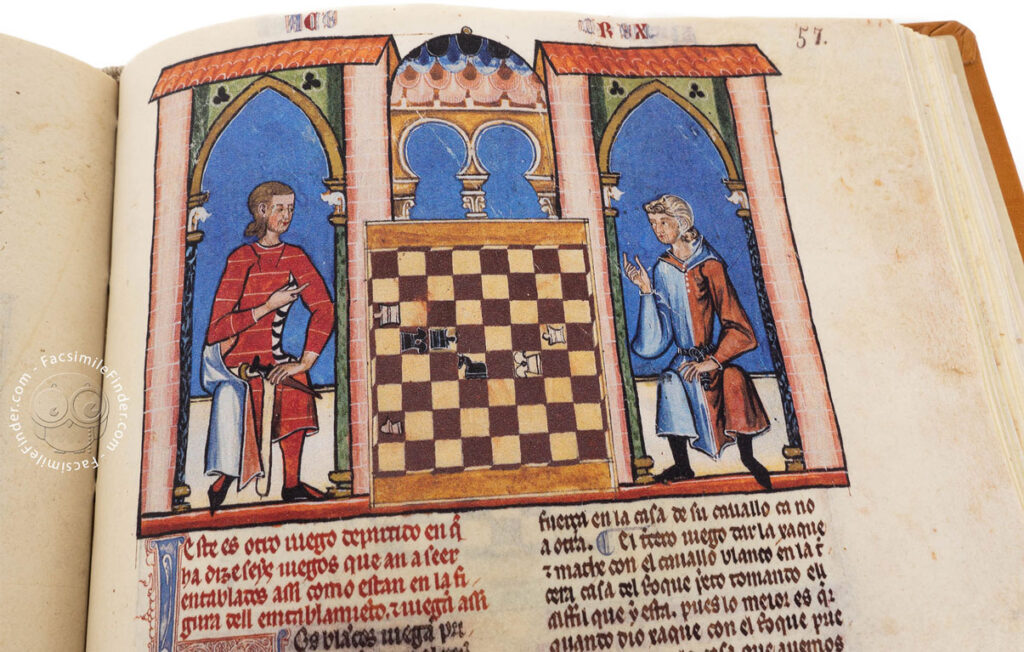
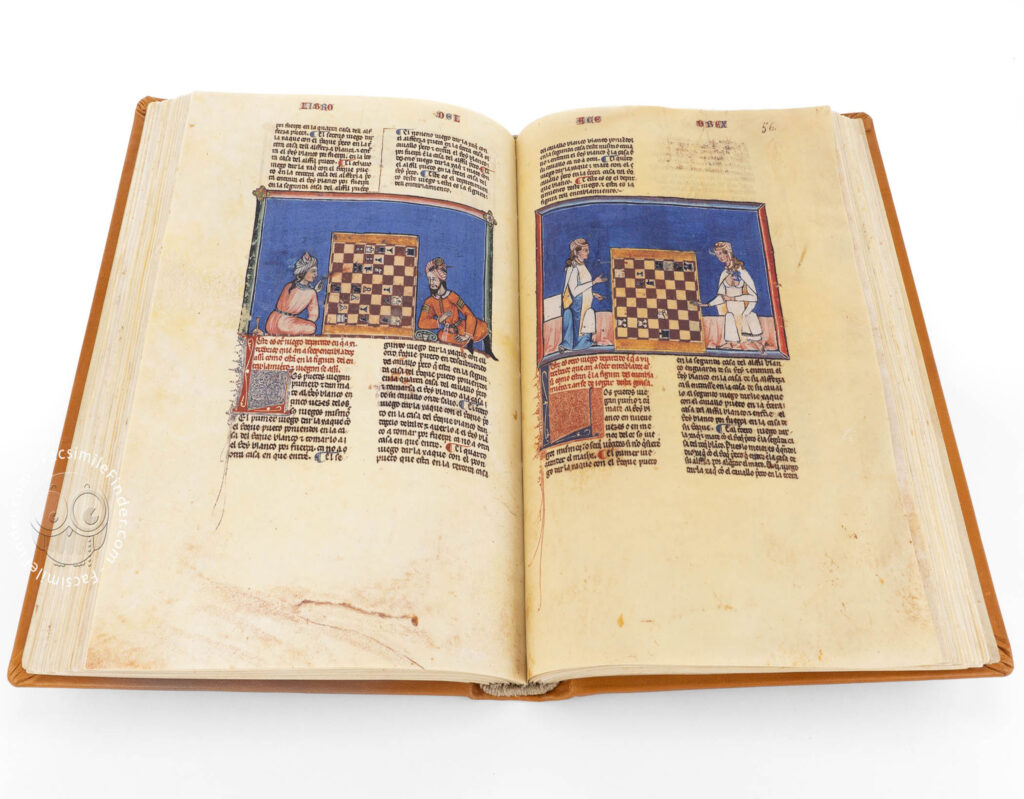
1283 में कास्टाइल के राजा अल्फोन्सो दसवें द्वारा कमीशन किया गया, लिब्रो दे लोस जुएगोस (खेलों की पुस्तक) को खेलों पर मध्ययुगीन यूरोपीय ग्रंथों में सबसे महत्वपूर्ण माना जाता है। यह पांडुलिपि एक महत्वपूर्ण ऐतिहासिक अभिलेख के रूप में कार्य करती है, जो अमूर्त मोहरे डिज़ाइनों की विस्तृत चित्रणों के माध्यम से शतरंज के नियमों और सौंदर्यशास्त्र का दस्तावेजीकरण करती है। शतरंज को एक साझा बौद्धिक चुनौती के रूप में प्रस्तुत करके, अल्फ़ोंसो का कार्य शतरंज के बोर्ड को तर्क का सार्वभौमिक मंच और खेल के अंतरराष्ट्रीय इतिहास में एक महत्वपूर्ण सेतु के रूप में उजागर करता है।.
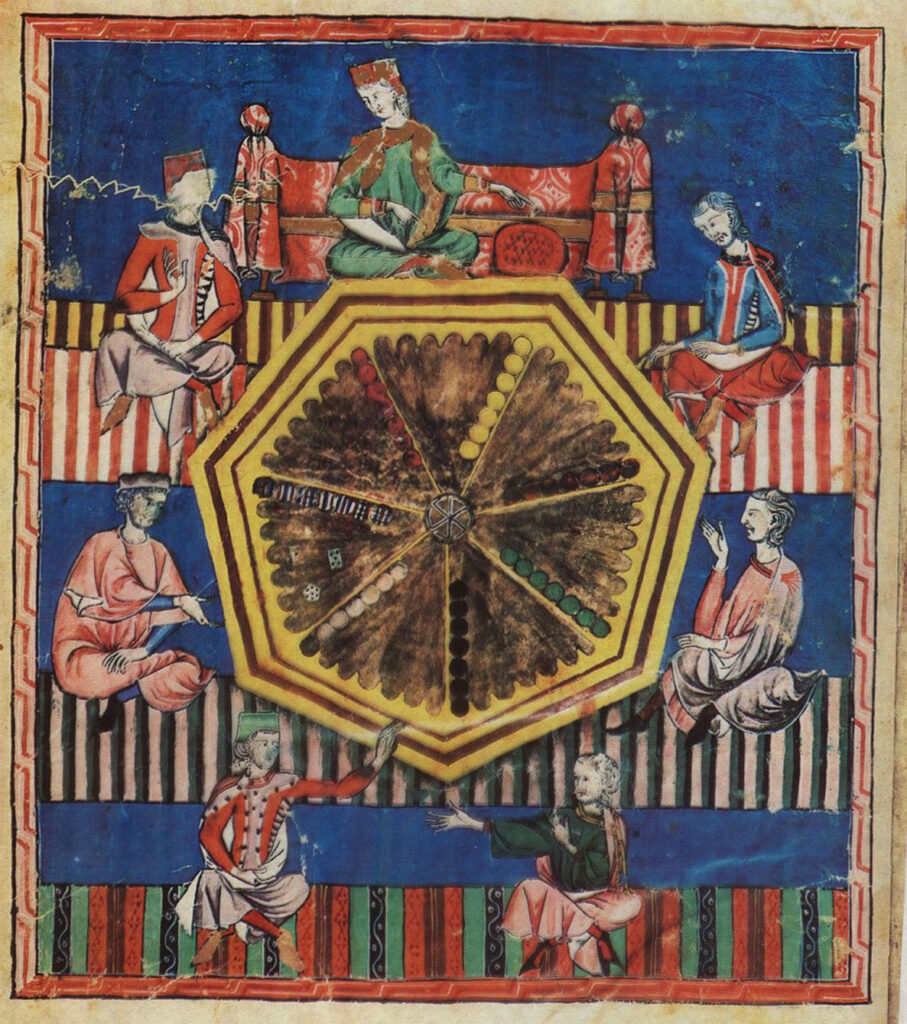
इस ग्रंथ में 100 से अधिक शतरंज समस्याएँ और अंत-खेल शामिल हैं, जिन्हें खिलाड़ियों द्वारा जटिल सामरिक चालों का विश्लेषण करते हुए दिखाने के लिए सावधानीपूर्वक चित्रित किया गया है। मानक शतरंज के अलावा, पुस्तक में खगोलीय शतरंज और ग्रेट चेस जैसे दुर्लभ रूपों का वर्णन है, जो अतिरिक्त मोहरों के साथ 12×12 ग्रिड पर खेला जाता था। इसमें आधुनिक बैकगैमॉन के मध्यकालीन पूर्वजों, पासे और टेबल्स पर भी अनुभाग शामिल हैं, जिससे यह 13वीं सदी की रणनीति और सामाजिक संस्कृति का एक व्यापक विश्वकोश बन जाता है।.
दिला राम साथी: बलिदान और उद्धार की गाथा
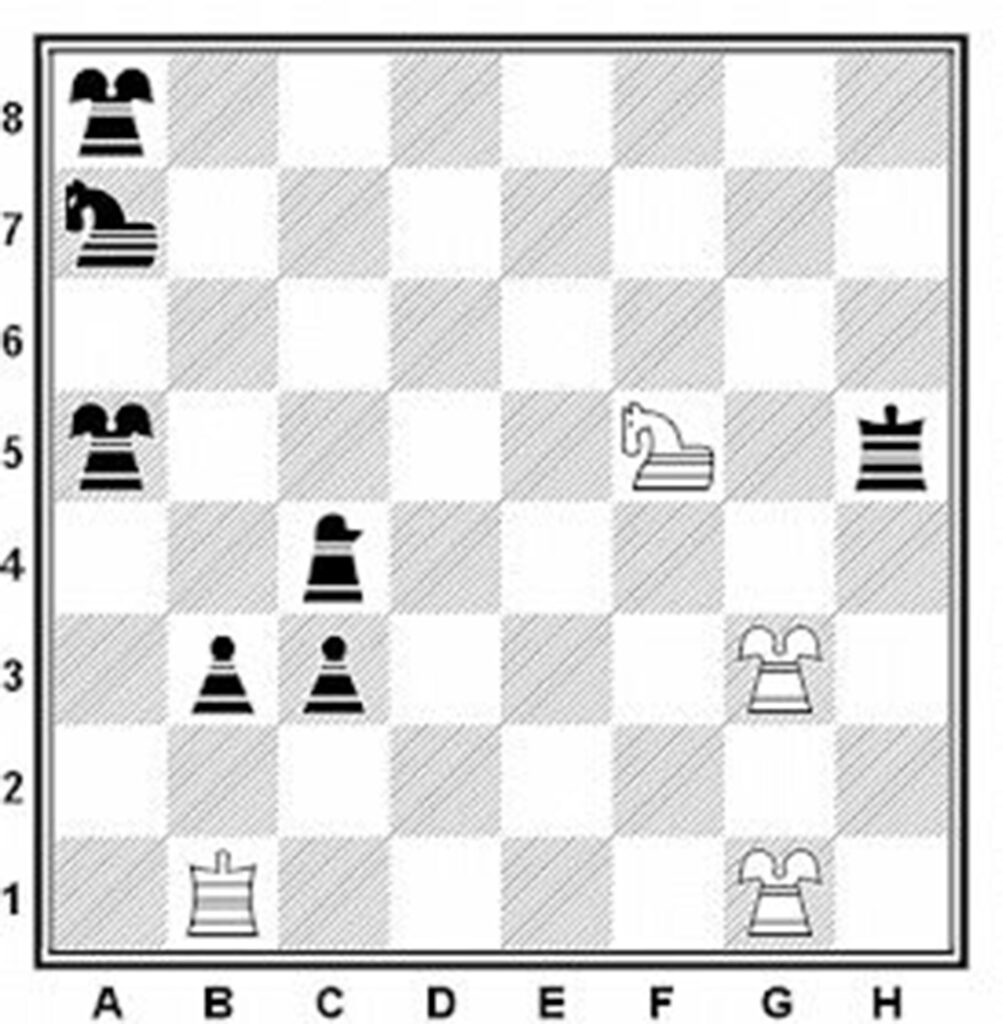
किंवदंती के अनुसार, एक कुलीन और उत्साही शतरंज खिलाड़ी ने एक उच्च-दांव वाले मैच में सब कुछ खो दिया और निराशा में अपनी प्रिय पत्नी दिला राम को अंतिम खेल पर दांव पर लगा दिया। जैसे ही मैच अपने चरमोत्कर्ष पर पहुंचा, वह कुलीन एक ऐसा प्रतीत होने वाला निराशाजनक मोड़ में फंस गया। हालाँकि, खेल देख रही दिलरम ने एक शानदार संयोजन देखा जो किसी और ने नहीं देखा था और उसने अपने पति से फुसफुसाकर कहा: “अपने दो रूक बलिदान करो, लेकिन मुझे बलिदान मत करो!” उसकी सूझबूझ से प्रेरित होकर, कुलीन ने क्रमशः दोनों रूक बलिदान कर दिए और एक घोड़े तथा एक बिशप (ऐतिहासिक अल्फिल) का उपयोग करके एक चौंकाने वाला शतरंज का अंत (चेकमेट) दे दिया।.
रणनीतिक प्रतिभा
दिलाराम मेट शतरंज के इतिहास में “डबल रूक बलिदान” के सबसे पुराने और सबसे सौंदर्यपूर्ण उदाहरणों में से एक है। यह मंसूबा (समस्या) दर्शाती है कि भारी सामग्री (रूक्स) का बलिदान छोटे मोहरों (घोड़ा और बिशप) के उत्तम समन्वय के माध्यम से पूर्ण विजय की ओर ले जा सकता है। फ़ारसी में “दिलाराम” का अर्थ 'हृदय की शांति' है, और सदियों से यह मटे इस बात का प्रमाण रहा है कि शतरंज केवल गणना का खेल नहीं, बल्कि कला, भावना और गहरे अंतर्ज्ञान का भी खेल है।.