
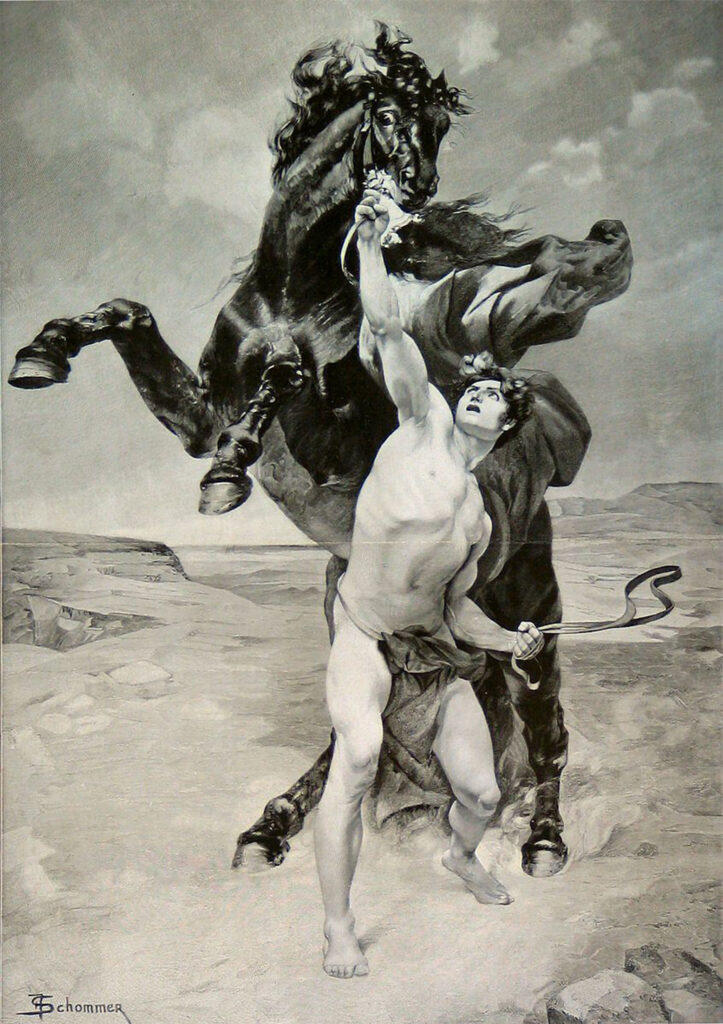
Im Altgriechischen bedeutet er “Ochsenkopf” (Boukephalos), was wahrscheinlich auf seine breite Stirn oder das Brandzeichen auf seiner Schulter zurückzuführen ist. Bucephalus ist das berühmteste Schlachtross der Geschichte. Der Legende nach wurde er König Philipp II. von Philonicus dem Thessalier für die stolze Summe von 13 Talenten angeboten, doch niemand konnte seinen wilden Geist zähmen. Als der junge Alexander bemerkte, dass das Pferd nur vor seinem eigenen Schatten Angst hatte, drehte er es zur Sonne, um es zu beruhigen. Als König Philipp dies sah, erklärte er bekanntermaßen: “O mein Sohn, suche dir ein Reich, das dir ebenbürtig und würdig ist, denn Makedonien ist zu klein für dich!”
Von den Schlachtfeldern zur Unsterblichkeit
Bucephalus begleitete Alexander während seines gesamten Feldzugs von Griechenland bis ins Herz Indiens. Er trug seinen Herrn durch die blutigsten Gefechte, von Granicus und Issus bis Gaugamela und der Schlacht am Hydaspes. Im Jahr 326 v. Chr., während des Indienfeldzuges, starb er entweder an seinen Kampfwunden oder an Altersschwäche (mit fast 30 Jahren). Ihm zu Ehren gründete Alexander die Stadt Alexandria Bucephala am Ufer des Flusses Jhelum im heutigen Pakistan.
Kulturelles Erbe
In der Kunst- und Literaturgeschichte steht Bucephalus als Symbol für Macht, Loyalität und einen ausgeprägten Instinkt. In den östlichen Traditionen, wo Alexander oft als “Iskandar” bezeichnet wird, wird Bucephalus als treuer Gefährte mit übernatürlichen Eigenschaften dargestellt. Er bleibt der wahre “Geist” hinter dem größten Eroberer der Geschichte und steht für eine Bindung, die über das Schlachtfeld hinausgeht.