An Intellectual Encounter: The Female Chess Players of the Middle Ages
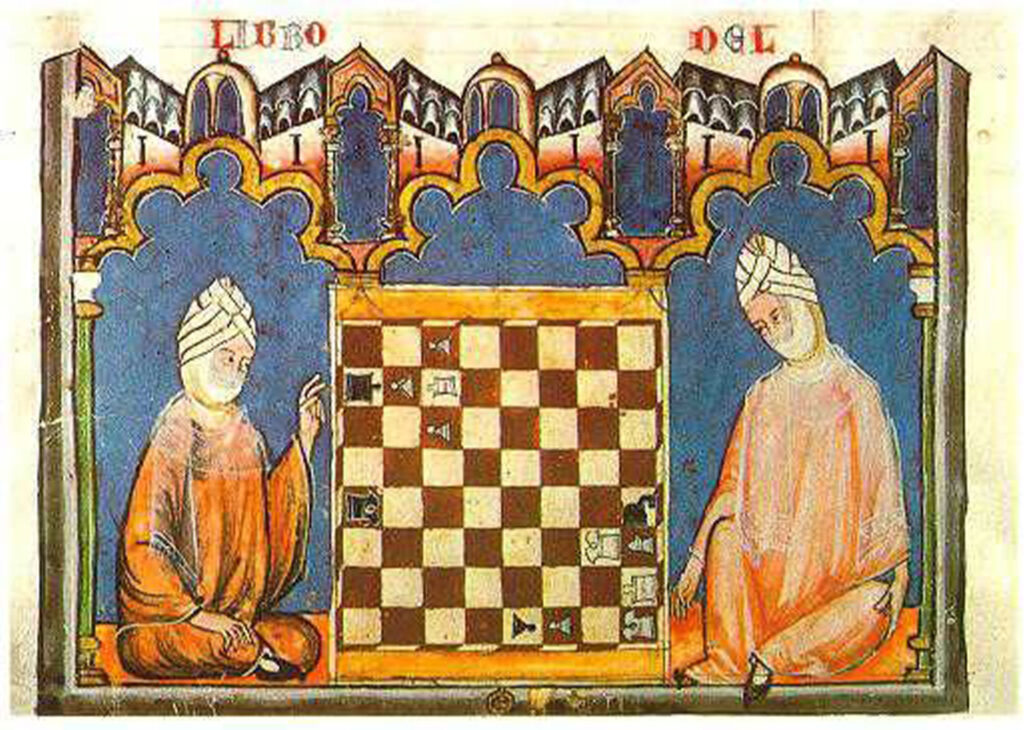
This rare miniature from the 1283 manuscript Libro de los Juegos features one of the most powerful depictions of women in chess history. Focused on the game with strategic depth under the shade of a tent, these two figures represent a union of intellect that transcends the social and religious boundaries of the era. Reflecting the multicultural “Convivencia” of Al Andalus, this work proves that chess was not merely a courtly pastime, but a universal space of expression where women showcased their mental prowess. What is embodied at this table is a civilized dialogue between women of different faiths and cultures, meeting within the fair and structured world of the game.
Checkmating Prejudice: The Cultural Bridge of Al-Andalus
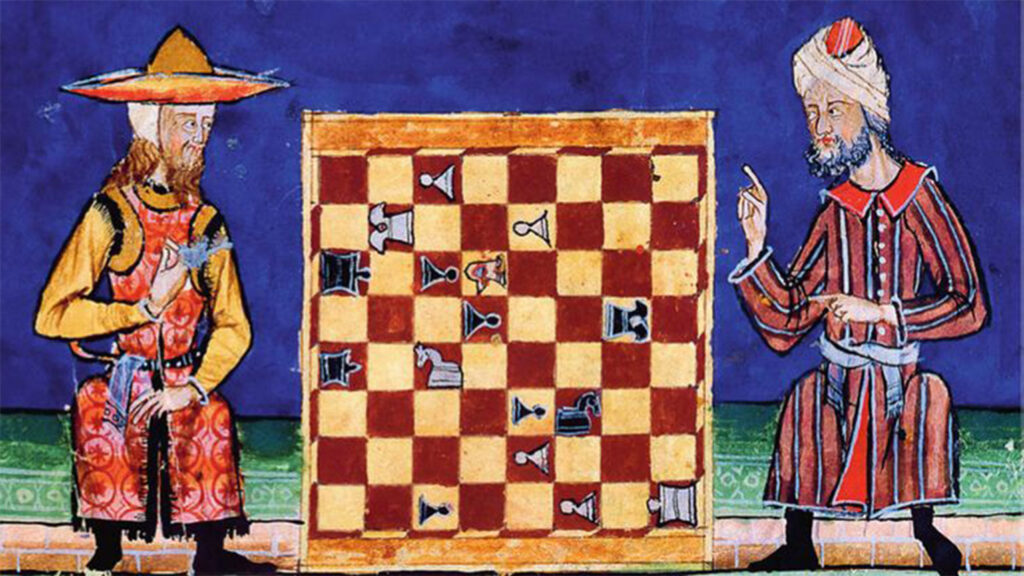
This striking scene from the 1283 manuscript Libro de los Juegos merges the multicultural fabric of the Middle Ages onto a single chessboard. Depicting a Muslim and a Jew setting aside religious and social barriers to engage in a mental struggle, it serves as a testament to the secular and universal power of chess. The chess pieces represent the unified cultural heritage of the Mediterranean, North Africa, and the Middle East, featuring abstract and geometric forms entirely stripped of religious iconography. This holistic design philosophy allows the players to focus solely on the rules of the game and each other’s intellect, turning the chessboard into a truly neutral ground. The civilized dialogue established at this table symbolizes the unifying power of craftsmanship and strategy.