The Mechanical Turk: The First Illusion of Artificial Intelligence
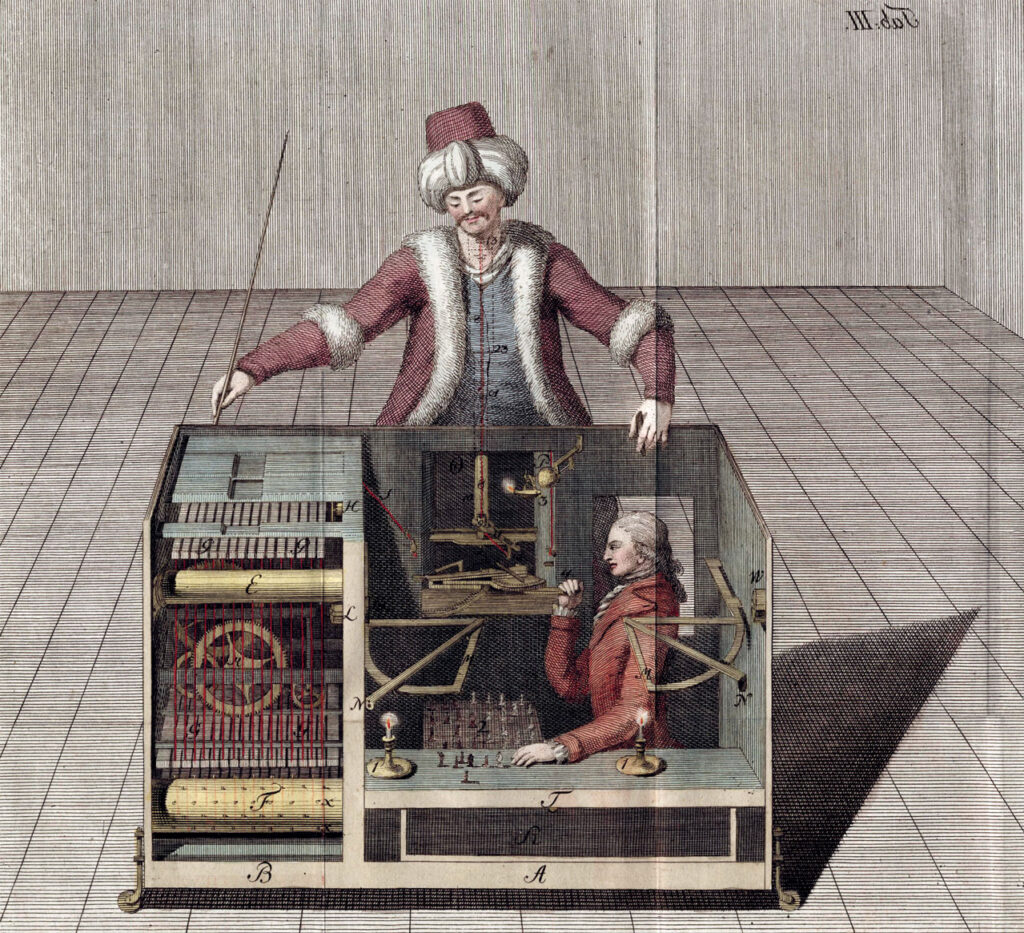
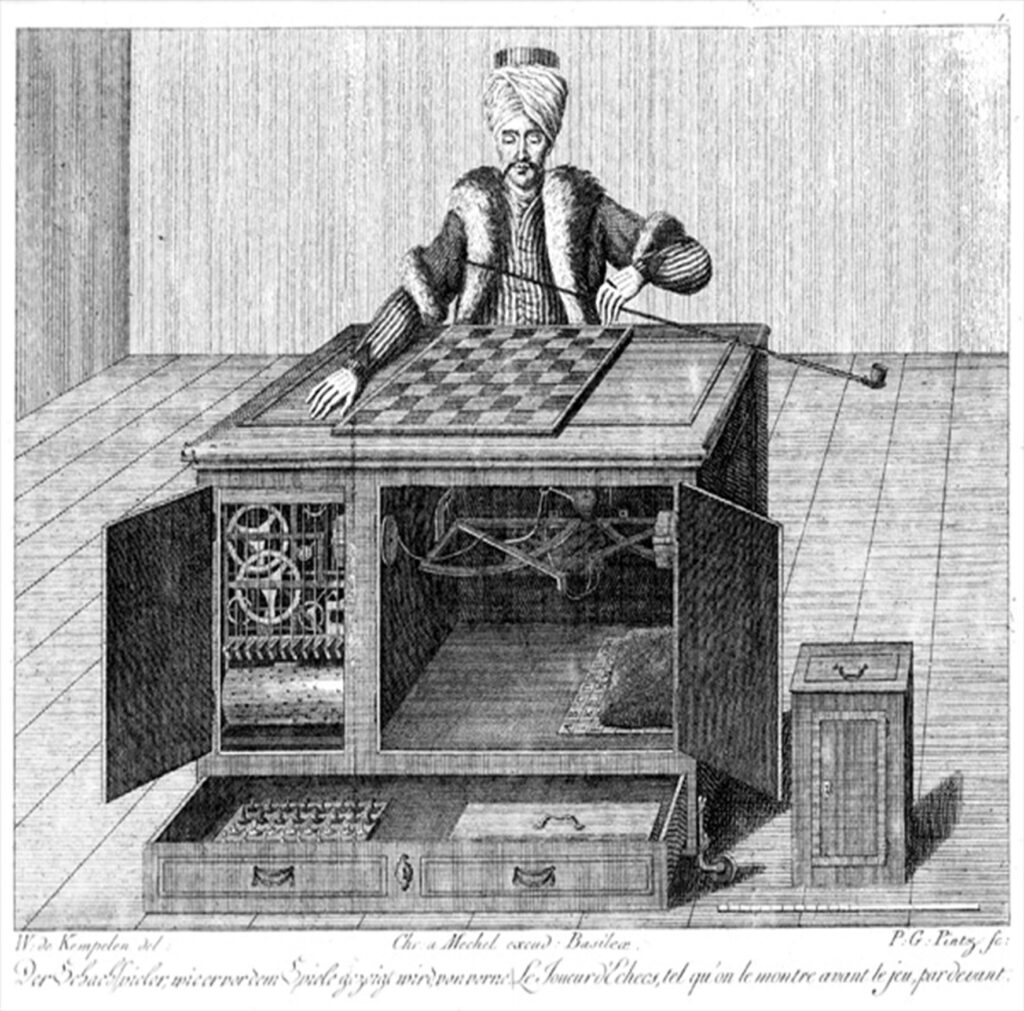
An Illusion That Enchanted Empires Designed in 1770 by Wolfgang von Kempelen to impress Empress Maria Theresa, the “Mechanical Turk” appeared to be a self-operating automaton powered by a complex system of gears. Seated at a large cabinet and dressed in traditional Ottoman robes and a turban, the figure challenged and defeated some of history’s most powerful minds, including Napoleon Bonaparte and Benjamin Franklin.
The Human Amidst the Gears For decades, the world believed they were witnessing a true “thinking machine.” In reality, the device was a masterpiece of illusion. The interior of the cabinet was cleverly designed to hide a professional human chess master, who shifted positions as different doors were opened to the public. Using a pantograph mechanism and magnetic indicators beneath the board, the hidden player monitored the opponent’s moves and executed their own through the Turk’s mechanical arm.
A Modern Legacy The Mechanical Turk is more than a tale of deception; it is a symbol of humanity’s eternal fascination with and fear of machine intelligence. It is no coincidence that Amazon named its micro-tasking platform “Mechanical Turk” today. The name remains a tribute to tasks that computers cannot yet perform, but which humans solve quietly “behind the scenes.”