
ŞAHÎ Bucephalus: A Legacy of Strategy and Culture
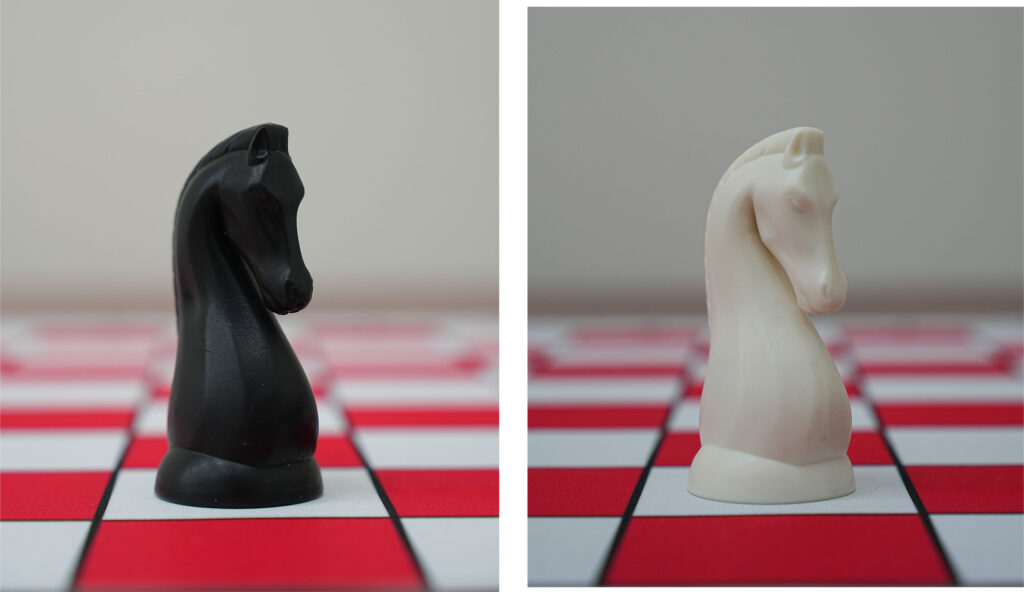
This figure carries the legacy of Philipp Stamma, the translator from Aleppo renowned for his work Essai sur le jeu des echecs, published in Paris in 1737. The design of the knight, featuring French curls in its mane, represents the seamless synthesis between the rational mindset of the Enlightenment and the ancient strategic depth of the East. The forms within the piece establish a cultural bridge, uniting the tactical genius of the “Stamma Mate” brought by Stamma from Aleppo to Europe with the military power of the Macedonian horse, Bucephalus.
1950 Dubrovnik and Staunton: Identity and Traditional Boundaries in Design
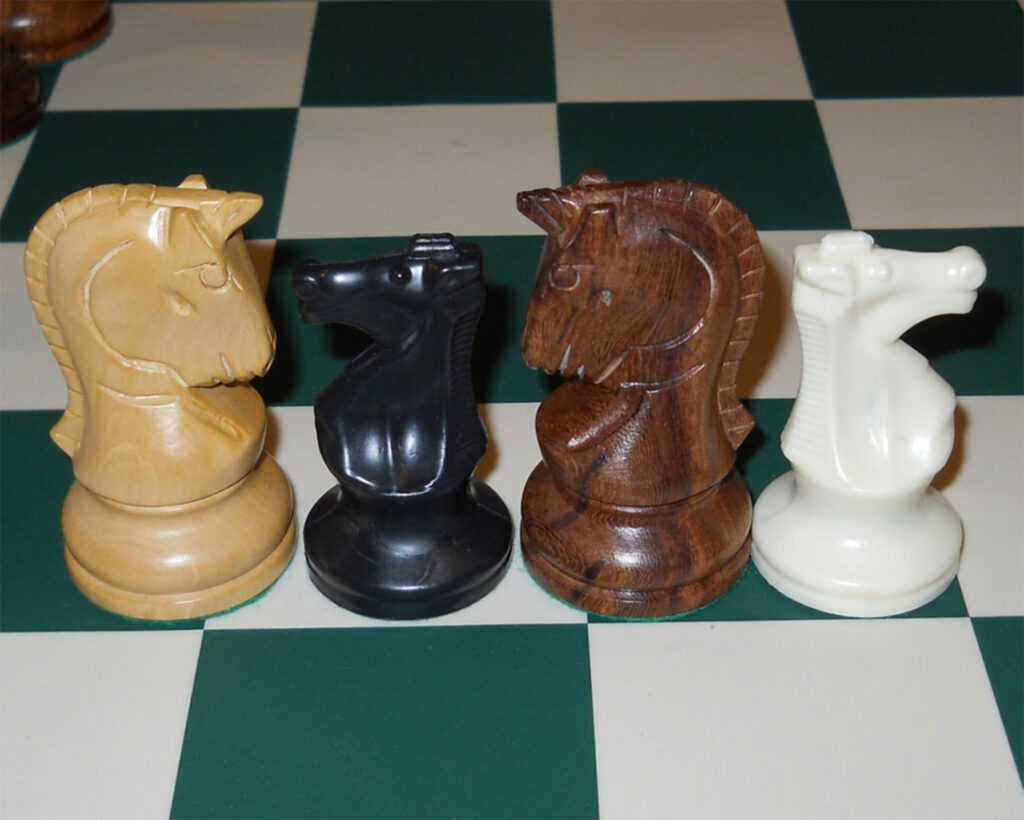
This visual contrasts two distinct design philosophies in the chess world. The 1950 Dubrovnik knight is a piece full of character, described by Bobby Fischer as “the best chess design ever made,” standing out with its sharp and sculptural lines. The dynamism in its design reflects the strategic spirit of chess through a unique artistic language.
In contrast, the Staunton design emerged in the mid 19th century primarily to simplify mass production and ensure uniformity based on traditional Western forms. Because it incorporates religious symbols such as the bishop’s miter and the cross, the Staunton set lacks a secular and inclusive identity; instead, it remains confined within the boundaries of a specific traditional structure. The difference between these two silhouettes highlights the distinction between the search for a unique character in chess and a standardized, traditional format.
The Lewis Knight: A Northern Legacy of the Middle Ages
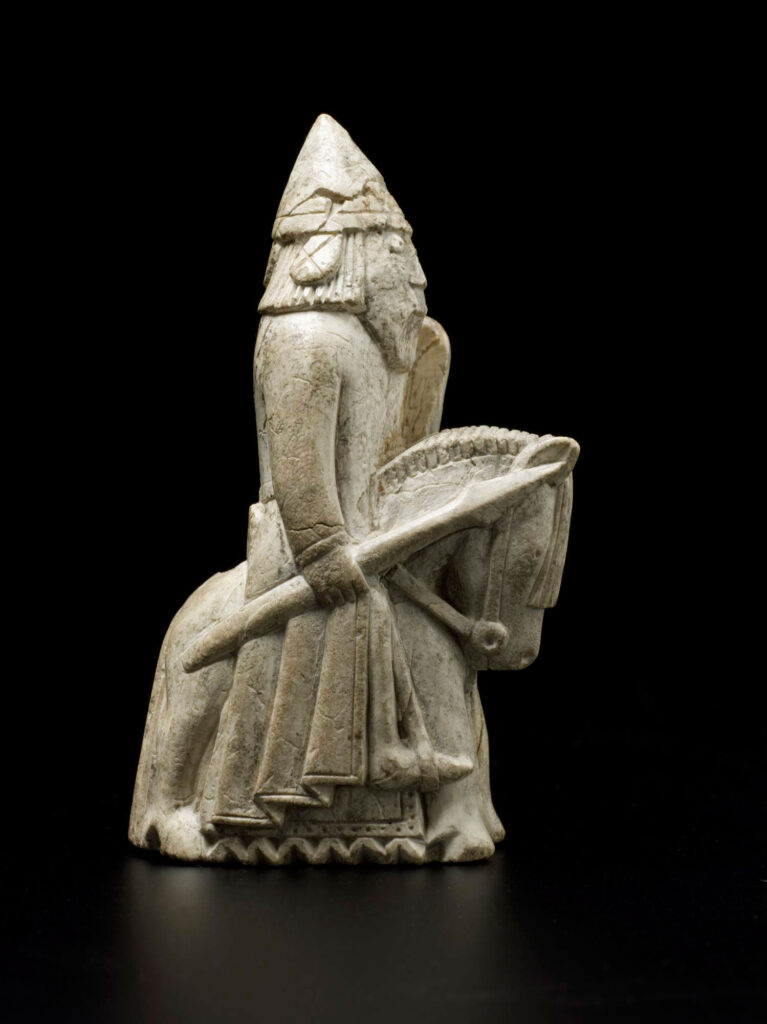
A masterpiece of 12th century Scandinavian craftsmanship, this figure is part of the world-renowned Lewis Chessmen collection discovered on Scotland’s Isle of Lewis in 1831. Meticulously carved from walrus ivory, the piece documents the aesthetic evolution of chess as it spread across Europe. The depiction of the mounted warrior symbolizes the profound connection between the game and the nobility and military hierarchy of medieval society. This iconic silhouette remains an extraordinary testament to the era’s artistic skill and the game’s enduring status as a work of art.
The Knight’s Tour: A Geometric Puzzle of Intellect
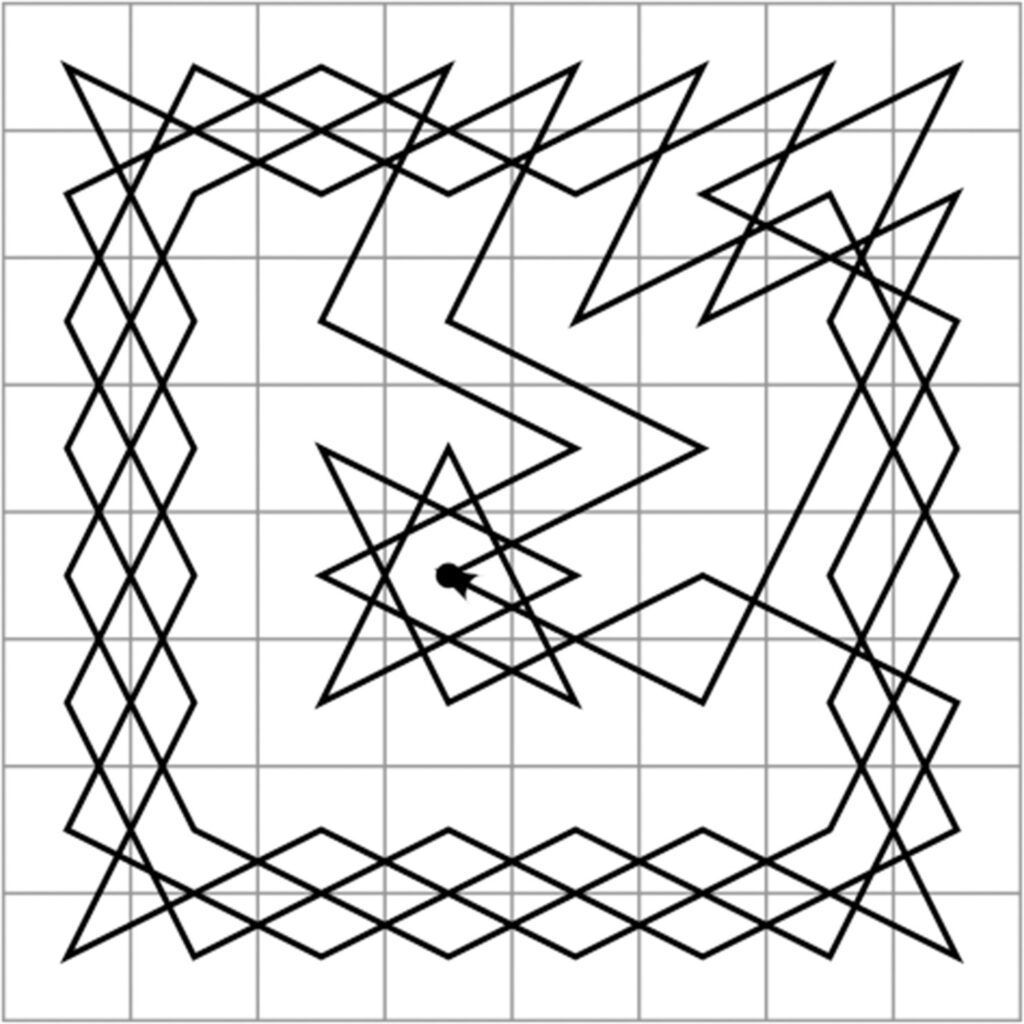
The Knight’s Tour is based on the principle of a knight visiting every single square on the chessboard exactly once. From Al-Adli in 9th-century Baghdad to Leonhard Euler in 18th-century Enlightenment Europe, this problem has fascinated geniuses as a perfect harmony of mathematics and strategy. The solution depicted here demonstrates how the knight’s leaps create a complex and mesmerizing symmetry, revealing the “geometric poetry” and universal logic of chess.
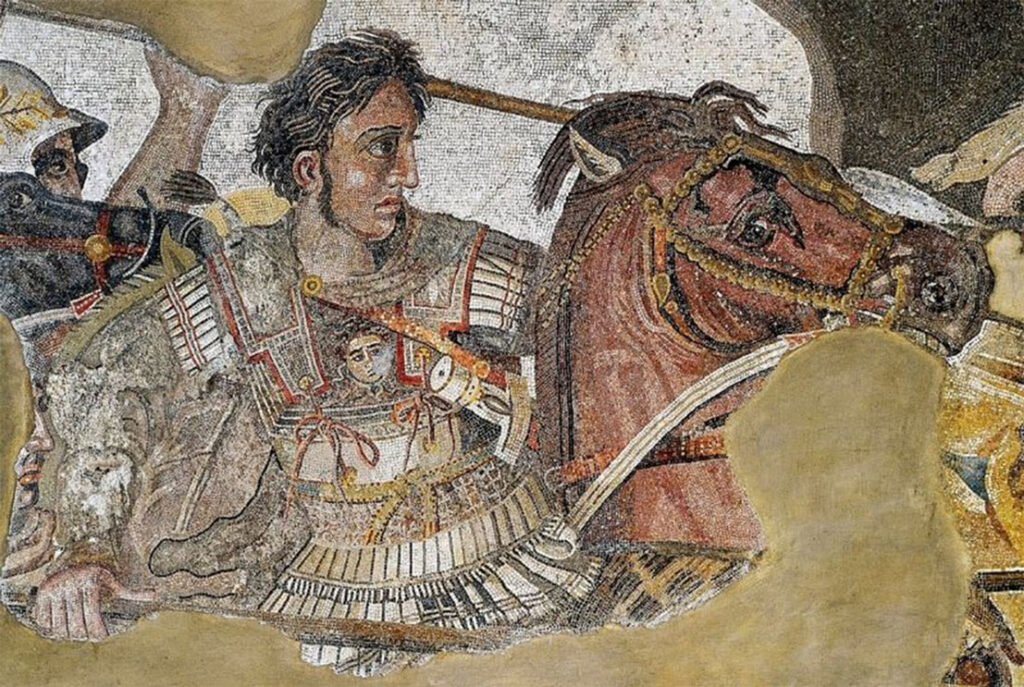
The Legendary Bucephalus: A Symbol of Conquest and Loyalty
This mosaic depicts Bucephalus, the Macedonian horse and the closest companion of Alexander the Great. Bucephalus, who remained by Alexander’s side throughout his campaigns, passed away in what is now Pakistan the very region where the historical roots of chess first took hold. Beyond representing one of history’s most enduring human-animal bonds, this iconic figure stands as a symbol of the cultural intersection between East and West, with a journey spanning from Macedonia to the Indus Valley. This story, merging military prowess with steadfast loyalty, preserves the memory of an epic journey that reached its conclusion in the cradle of chess.