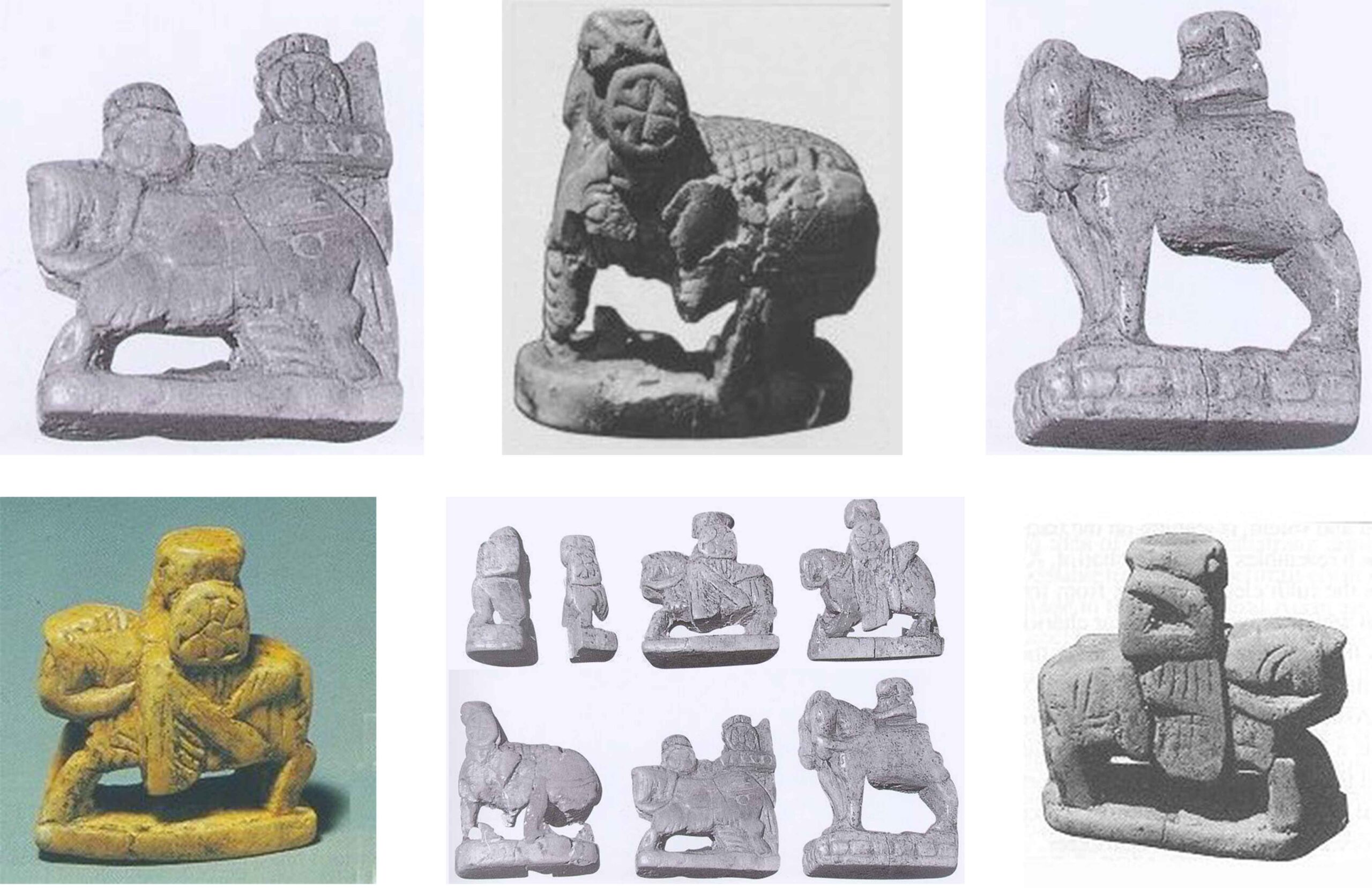
The ivory pieces from the 7th–8th century found at the Afrasiyab site in Samarkand represent the oldest known chess set. These detailed figurines provide a figurative look at the game’s Central Asian roots, featuring the Rook as a chariot with multiple horses, the knight piece is depicted as a cavalryman with a shield, and an elephant-mounted Alfil along with several pawn pieces. The set captures the military hierarchy of the Silk Road era before the move toward abstract designs.
English: Narrators of the North Sea:
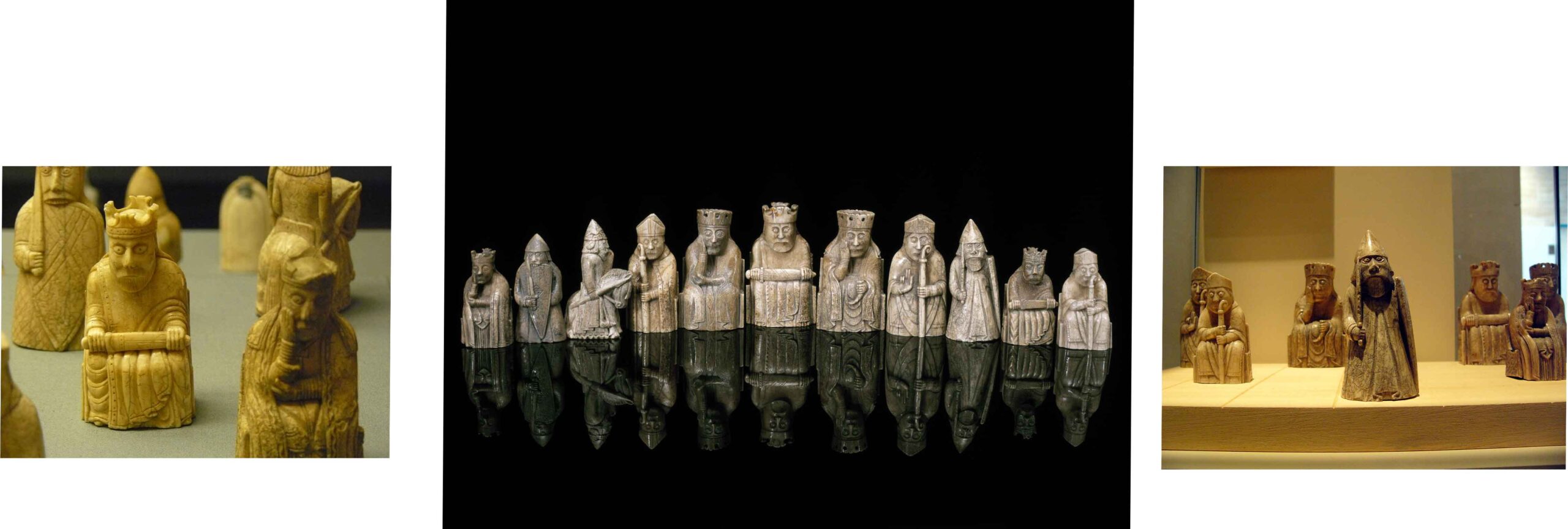
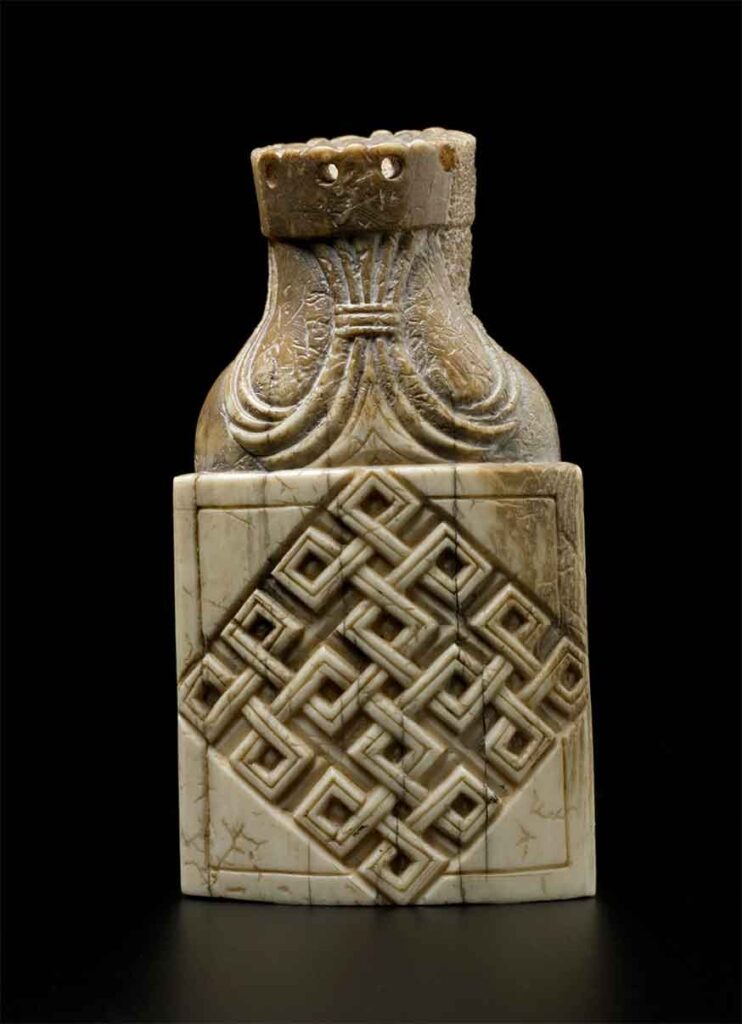
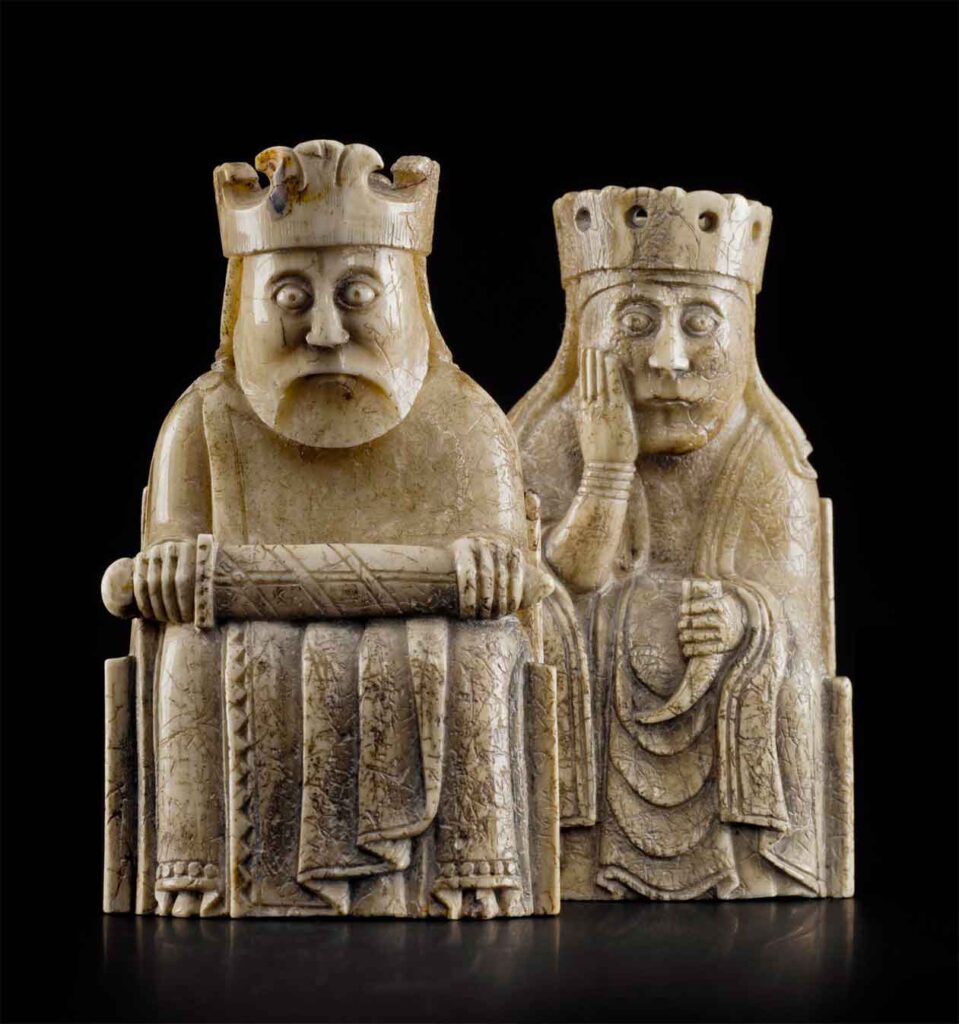
The Lewis Chessmen Found on Scotland’s Isle of Lewis and carved from walrus ivory, these 12th-century figures mark the spectacular transition of chess from abstract shapes to vivid storytelling. Shaped by Norse craftsmanship, these pieces with their anxious kings, contemplative queens, and shield-biting berserkers reflect the social hierarchy and psyche of Medieval Europe. As the geometric pieces of the East reached the North, they were transformed into these dramatic, humanized characters, laying the visual foundation for modern chess.